
Service Dog Rights & Responsibilities
Under the Americans with Disabilities Act (ADA), service dog handlers have the federal right to be accompanied by their animals in all areas where the public is normally allowed. This includes restaurants, hospitals, hotels, and retail stores. These rights extend specifically to dogs (and in some cases miniature horses) that are individually trained to do work or perform tasks for people with disabilities, including physical, sensory, psychiatric, intellectual, or other mental disabilities. Businesses may only ask two specific questions: (1) is the dog a service animal required because of a disability? and (2) what work or task has the dog been trained to perform?
-
Control: The dog must be under the handler's control at all times, typically via a leash or harness unless the disability prevents its use.
-
Behavior: The dog must be housebroken and must not display aggressive behavior or excessive barking.
-
Task-Specific: The dog must perform active tasks that mitigate the handler's disability; emotional support alone does not qualify under the ADA.
-
Safety: Handlers are responsible for the animal's care and supervision, and control of their service animal at all times.

Service Dogs in Public Places
Service dogs are generally permitted to accompany their handlers anywhere the public is allowed to go. Understanding your access rights and common misconceptions helps ensure a smooth experience for handlers and businesses alike.
Common Places Allowed
-
Retail: Grocery stores, malls, and pharmacies.
-
Restaurants: Indoor dining, cafes, and patios.
-
Hotels: Guest rooms, lobbies, and common areas.
-
Transportation: Buses, trains, ride shares, and planes.
-
Medical: Waiting rooms, clinics, and patient areas.
Limited Access & Myths
Access may be limited in sterile areas like operating rooms or burn units where safety is a concern.
-
Myth: Service dogs must wear a vest.
-
Myth: Handlers must carry a certificate.
-
Myth: Businesses can demand documentation.
-
Myth: Only guide dogs qualify under ADA.
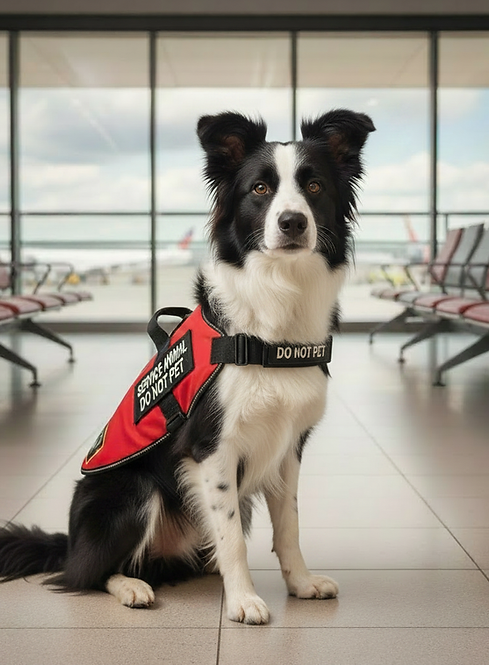
Travel Guidelines
-
Airline Forms: Many airlines require a completed U.S. DOT Service Animal Air Transportation Form before travel.
-
Airport Access: Service dogs are permitted in airport terminals, security checkpoints, and designated relief areas.
-
Airline Policies: Individual airlines may have additional procedures and documentation requirements beyond federal regulations.
-
Preparation Tips: Pack water/container, waste bags, medications, and copies of important travel documents when traveling with your service dog.
-
Onboard Requirements: Service dogs must remain under control and fit safely within the handler's foot space without blocking aisles.
-
Behavior Standards: Airlines may deny boarding to dogs displaying aggressive, disruptive, or uncontrolled behavior.
-
International Travel: Additional vaccination, import, and quarantine requirements may apply when traveling outside the United States.
U.S. Service Dog Information Hub 2026
Housing Rights & Fair Housing Act
Under the Fair Housing Act (FHA), individuals with disabilities may request reasonable accommodations for service animals, even in housing communities that otherwise prohibit pets. Landlords and housing providers generally may not charge pet fees, pet rent, or pet deposits for a qualified service animal. While housing providers may request reliable documentation when a disability or need for the service animal is not readily apparent, they cannot require registration, certification, special identification cards, or proof of training. Service animals are not considered pets under federal housing law, and qualified individuals are entitled to equal access to housing opportunities without discrimination based on their disability.
Service Dogs in Training
-
Federal Law: The ADA does not grant federal public access rights or limited protections for service dogs in training.
-
State Protections: Many states have enacted laws that allow service dogs in training to accompany their trainers in public places, while others provide limited or no protections.
-
Training in Public: Public environments such as stores, restaurants, transportation systems, and hotels are often important parts of service dog training when permitted by law.
-
State-Specific Rules: Requirements regarding trainer access, identification, and training privileges vary by state and should be reviewed before training in public.
Service Dogs vs. Emotional Support Animals
While both service dogs and emotional support animals provide valuable assistance to individuals with disabilities, they are not the same under federal law. Service dogs are individually trained to perform specific tasks directly related to a person's disability. such as guiding individuals who are blind, alerting to medical conditions, or assisting with mobility. Emotional support animals provide comfort through their presence but are not required to undergo task-specific training. Because of this distinction, service dogs are granted public access rights under the Americans with Disabilities Act (ADA), while emotional support animals generally do not have the same access privileges in public places. Understanding these differences helps ensure that service animal laws are applied appropriately and that legitimate service dog teams can exercise their rights without confusion.
Emergency Planning & General Resources
Handlers should maintain a digital and physical duplicate of all training logs, veterinary records, and if applicable, voluntary registration IDs. In cases of disaster or emergency shelter entry, the ADA still protects your right to remain with your service dog. Ensure your dog wears identifiable gear (though not legally required) to assist emergency personnel. For more help, contact the ADA Information Line or the Department of Justice Civil Rights Division.
Additional Resources
For the most current information regarding service dog rights and responsibilities, handlers should consult official resources such as the Americans with Disabilities Act (ADA), the U.S. Department of Justice, the U.S. Department of Transportation, and applicable state laws. Because regulations can change, reviewing official guidance is the best way to stay informed and compliant.